30% of your revenue happens while you sleep
Founders don’t buy software during business hours, they buy software when it’s most convenient for them. That often happens after hours at 9 pm, 12 am, or even

Somewhere between $500K and $5M ARR, revenue infrastructure becomes a problem you can’t ignore.
What used to work (like Stripe for payments, Chargebee for subscriptions, a proposal doc, an e-signature tool, a few spreadsheets holding everything together) starts to feel a little… fragile.
That’s usually the moment teams start searching for a Chargebee alternative. Chargebee can handle quotes and CPQ workflows, but for many sales-led teams, those pieces still live across multiple systems, which is where the friction starts.
At this stage, the real decision isn’t “which tool is best.” It’s which revenue architecture fits how you sell today and where you’re heading next. Some teams need deeper subscription control. Others need audit-ready finance. And some need to fix the buying experience itself, replacing multi-tool chaos with a single, sales-led path from quote to cash.
We’ll clearly outline options so you can choose without guessing.
Chargebee is built for billing to run cleanly after the sale. The problem is that many SaaS teams hit a stage where the sale itself becomes the bottleneck.
At $500K–$5M ARR, you start seeing “small” requirements that billing-first tools don’t love: multi-year terms, ramp pricing, approvals on discounts, PO workflows, and customers who want to review terms before they pay. You can bolt on quoting, e-sign, and internal approvals, but now you’re juggling tools and reconciling data across them.
Cost pressure often adds to this. Revenue-based fees that felt fine early on can start to sting as volume grows. That’s when the search for a Chargebee alternative begins.
The moment you go sales-led, you run into a weird tax: you end up building the same deal twice.
First, you build it in “sales land” – a quote, an order form, a set of terms, a discount that needs approval, maybe a ramp for year one. Everyone agrees. Buyer signs. Great.
Then someone has to rebuild that exact structure in billing so invoices and renewals behave. Seats, add-ons, start dates, proration, payment terms, billing cadence. If anything changes mid-flight, you’re back in version-control hell: which doc is the latest, and which system reflects reality?
Chargebee is great at the latter. But if your friction is happening before the subscription exists (like configuring the order cleanly, keeping pricing guardrails intact, and getting to signature and payment fast), you need quote-first infrastructure before you worry about billing polish.
Chargebee is organized around plans. And a plan usually ties together the price, billing frequency, and what’s included. That’s tidy when you have a few standard tiers. It gets a bit more difficult when sales-led reality shows up.
The moment you start doing “same product, different deal” pricing, you’re often pushed into one of two bad options: create new plans (and manage a growing pile of plan variants), or push exceptions into discounts, coupons, and manual notes that don’t age well. Add annual prepay, custom billing terms, ramp pricing, or a bespoke bundle, and your product catalog can start to feel like the office “random cables” box – half of it probably matters, nobody knows what, and everyone’s afraid to throw anything out.
This is why companies begin to experience friction as soon as they move beyond clean, self-serve subscriptions.
Chargebee is great at “subscriptions exist, invoices go out.” The moment you’re juggling custom deals, approvals, contract terms, and pricing experiments, you start shopping for tools that match how you actually sell. Below are the most popular Chargebee alternatives, organized by the problem they solve best, with the tradeoffs that show up after week two.
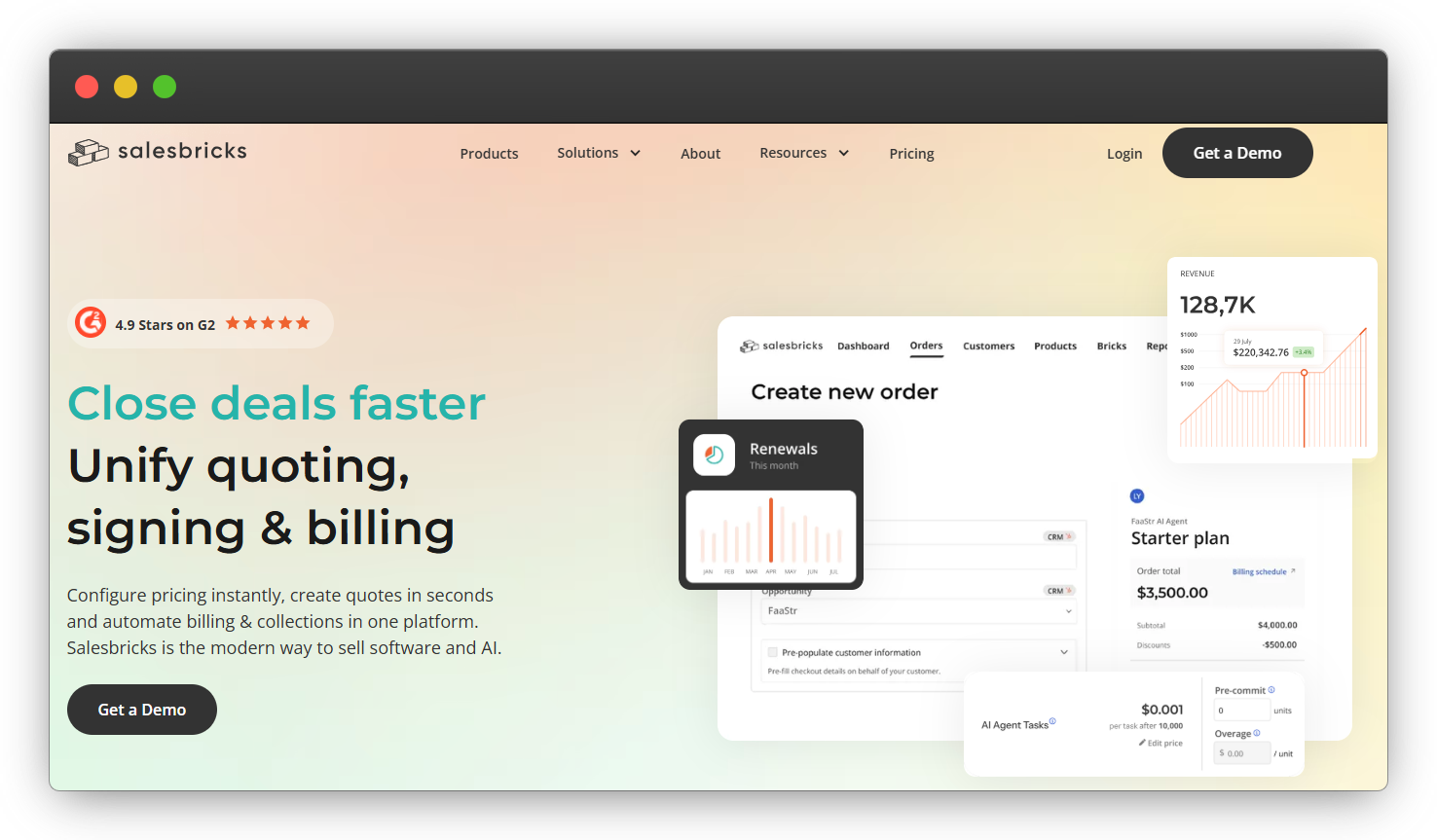
Salesbricks is built for the moment your SaaS stops being “click to buy” and starts being “let’s work out the deal.” And if you’ve ever tried to high-five someone on the opposite airport walkway, you know the feeling of a sales stack where every tool is moving at a slightly different speed. You reach for the signature, billing is somewhere else, finance wants a different version, and the buyer is just… waiting. Salesbricks sits on top of Stripe for payments, so finance keeps the reporting and payout flow they already know.
Salesbricks pulls that last mile into one place: configure the offer, get approvals, send it, get it signed, and get paid. The Brick model keeps your catalog sane as pricing gets more custom – you reuse building blocks (seats, features, platform fees, usage blocks) and price them per deal without spawning endless plan variants. It also supports Magic Links, so self-serve buyers can go from your pricing page straight into checkout, while sales runs negotiated deals through the same system.
Pricing starts at $500/month billed annually on the Starter tier.
Pros:
Cons:
Limitations: Confirm fit if your core need is purely “offload global tax” rather than fixing quote-to-cash speed.
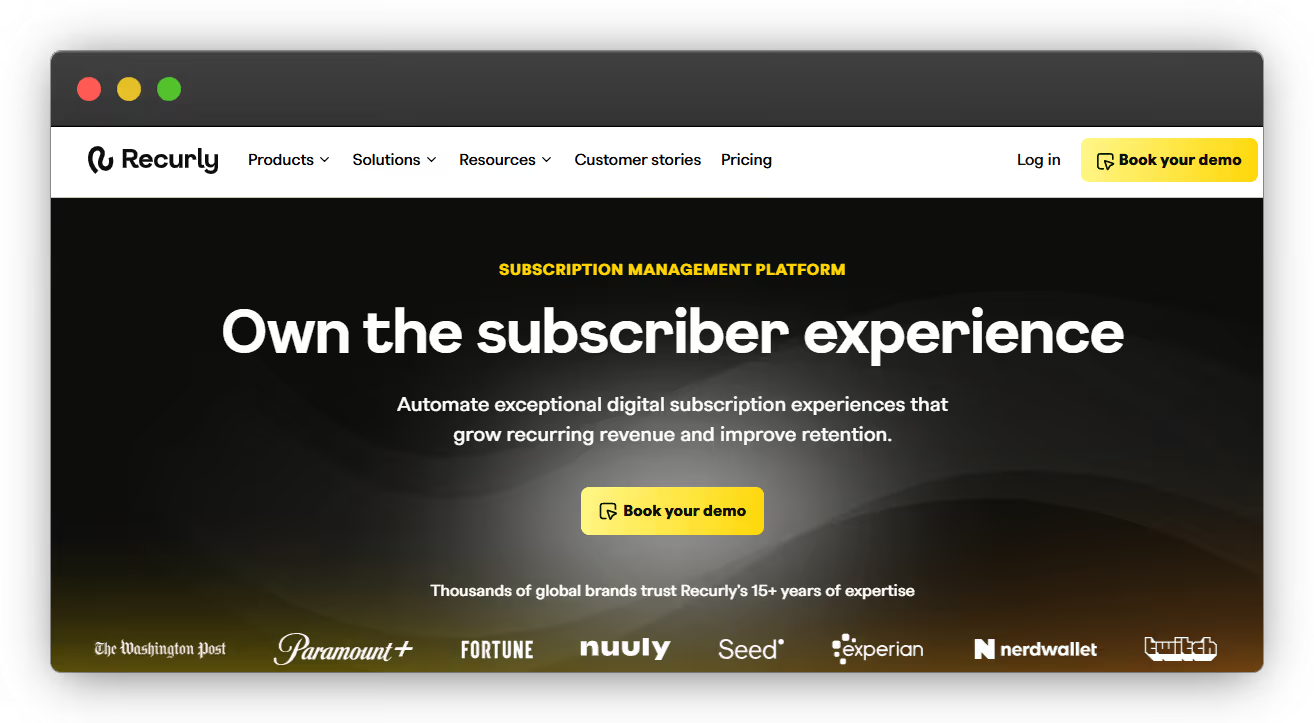
Recurly makes the most sense when you’re running a high-volume subscription business and your priority is keeping the revenue you already earned, especially by improving retries, dunning, and retention workflows. It’s built to help you reduce involuntary churn and manage subscriptions at scale. The tradeoff is that it’s not trying to be your quote-to-cash layer. If you’re sales-led, you’ll still be living in separate tools for quoting, contracting, and e-signatures, which means the handoffs and delays don’t magically disappear.
Pricing: Typically sales-led and varies by scale.
Implementation: Often ~2-6 weeks for a straightforward migration.
Pros:
Cons:
Limitations: Contract-to-invoice automation and single-flow checkout for negotiated deals.
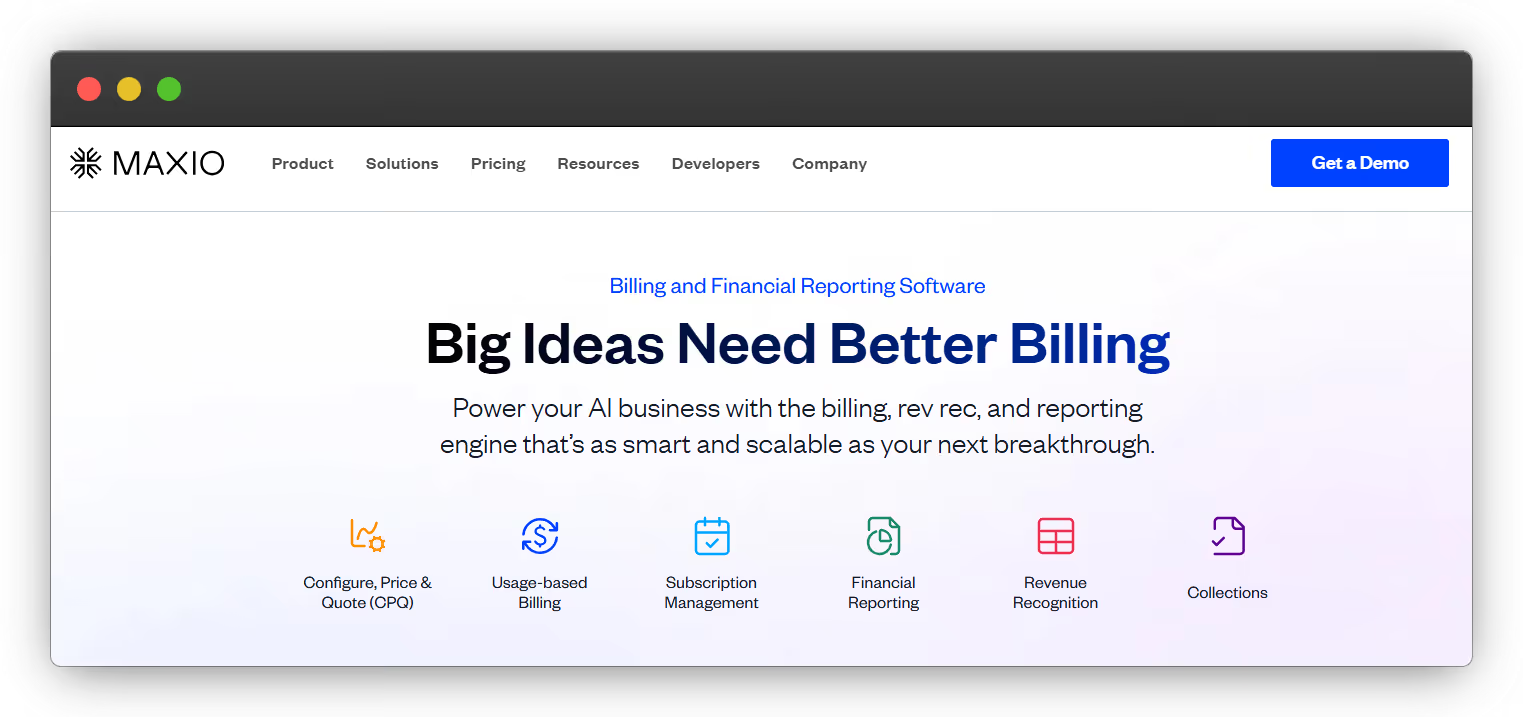
Maxio tends to be great for when finance is driving the decision and you want billing plus revenue recognition and reporting under one roof, so you can close the books faster and stay audit-ready. It’s a strong answer for ASC 606 style needs, SaaS metrics, and clean board reporting. The tradeoff is speed on the sales side. You’ll usually still bolt it onto CPQ and signature tools, which means the quote-to-contract-to-billing journey stays stitched together rather than truly unified.
Pricing: Quote-based and varies by package.
Implementation: Often ~4-10+ weeks depending on rev rec complexity.
Pros:
Cons:
Limitations: Buyer-facing checkout and sales workflow unification.

Paddle is a go-to when the global tax and compliance burden is the real headache and you want a Merchant of Record to take that weight off your team while you sell internationally. It’s built to handle payments, tax, and compliance responsibilities in a way most billing platforms simply don’t. The tradeoff is that it doesn’t turn sales-led deals into a single smooth motion by default. You can still feel friction between a negotiated quote and the moment money lands, because quoting and contracting often live elsewhere.
Pricing: Standard-rate pricing plus custom at scale.
Implementation: Often ~1-4 weeks, longer for complex migrations.
Pros:
Cons:
Limitations: Sales-led quoting and contract flow.

FastSpring is often chosen by software and digital product companies that want Merchant of Record coverage and a global-ready checkout experience without building a tax operation in-house. Like Paddle, the big win is that it sells on your behalf, including tax handling. It also offers tooling around B2B selling, but it’s still worth pressure-testing how your exact sales process runs end to end. If your goal is a truly unified quote → sign → pay flow for a sales-led SaaS motion, you’ll want to validate that workflow early rather than assuming it comes “for free.”
Pricing: Transaction-fee based and typically quote-based at scale.
Implementation: Often ~2–6 weeks depending on scope.
Pros:
Cons:
Limitations: How negotiated deals convert into contracts and invoices in practice.

Younium is a contender when your subscription business starts looking more enterprise: multi-entity setups, parent-subsidiary billing, and the need for tighter finance controls and traceability. It’s built for companies that have outgrown “simple billing” and want a more structured revenue engine. The tradeoff is that it can be heavier than what earlier-stage teams need, and it won’t automatically fix sales velocity on its own. If your biggest issue is the last-mile sales handoff, you’ll still want to map the quote and contract flow carefully.
Pricing: Quote-based.
Implementation: Often ~4-12 weeks for multi-entity and finance-heavy setups.
Pros:
Cons:
Limitations: Sales-led buyer experience and workflow simplification.
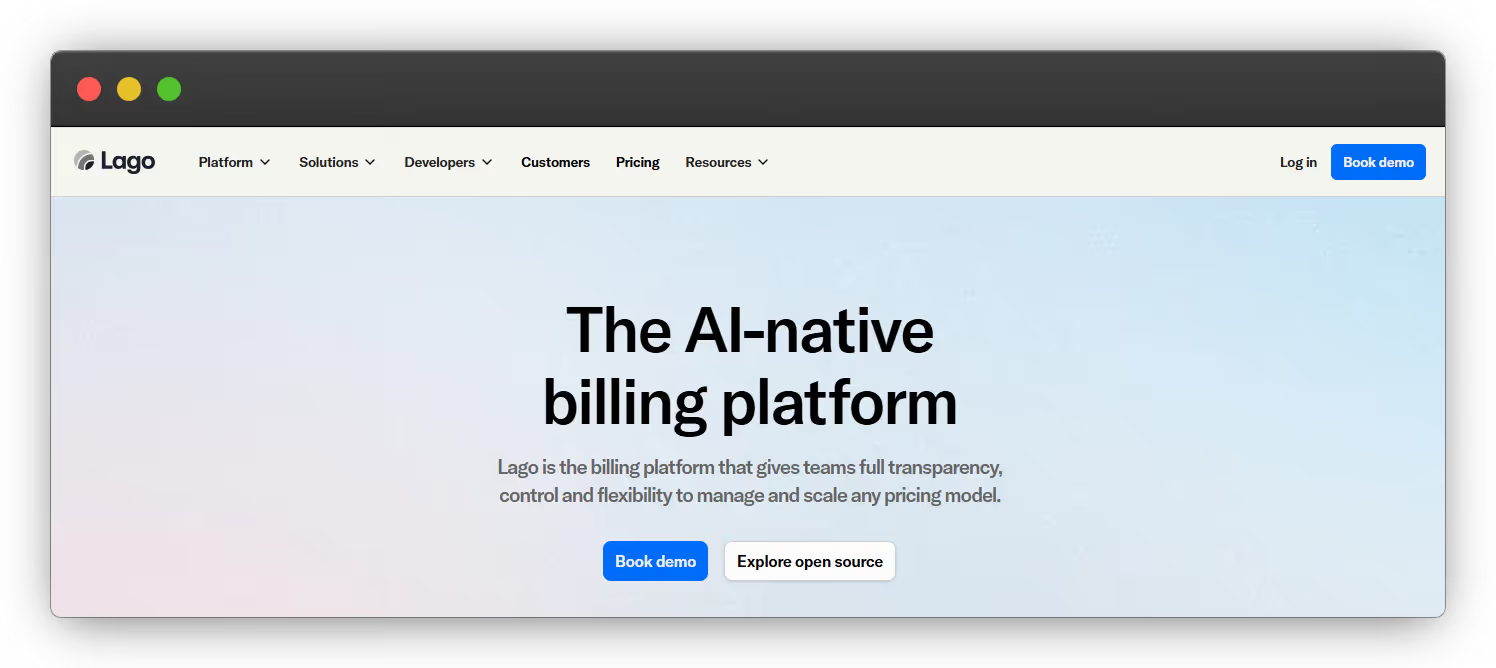
Lago clicks with engineering-led teams who want deep control over usage metering and billing logic, especially if you’re doing more modern pricing models and you don’t want a vendor black box. It’s flexible, transparent, and fits teams who like building and owning infrastructure. The tradeoff is operational speed for everyone else. If pricing and packaging changes require developer time, RevOps and founders can get stuck in ticket queues. That’s fine when you have strong engineering capacity, but it’s a real constraint if speed is the point.
Pricing: Varies by deployment and plan.
Implementation: Often ~2-8+ weeks depending on custom logic.
Pros:
Cons:
Limitations: Non-technical teams’ ability to move fast.
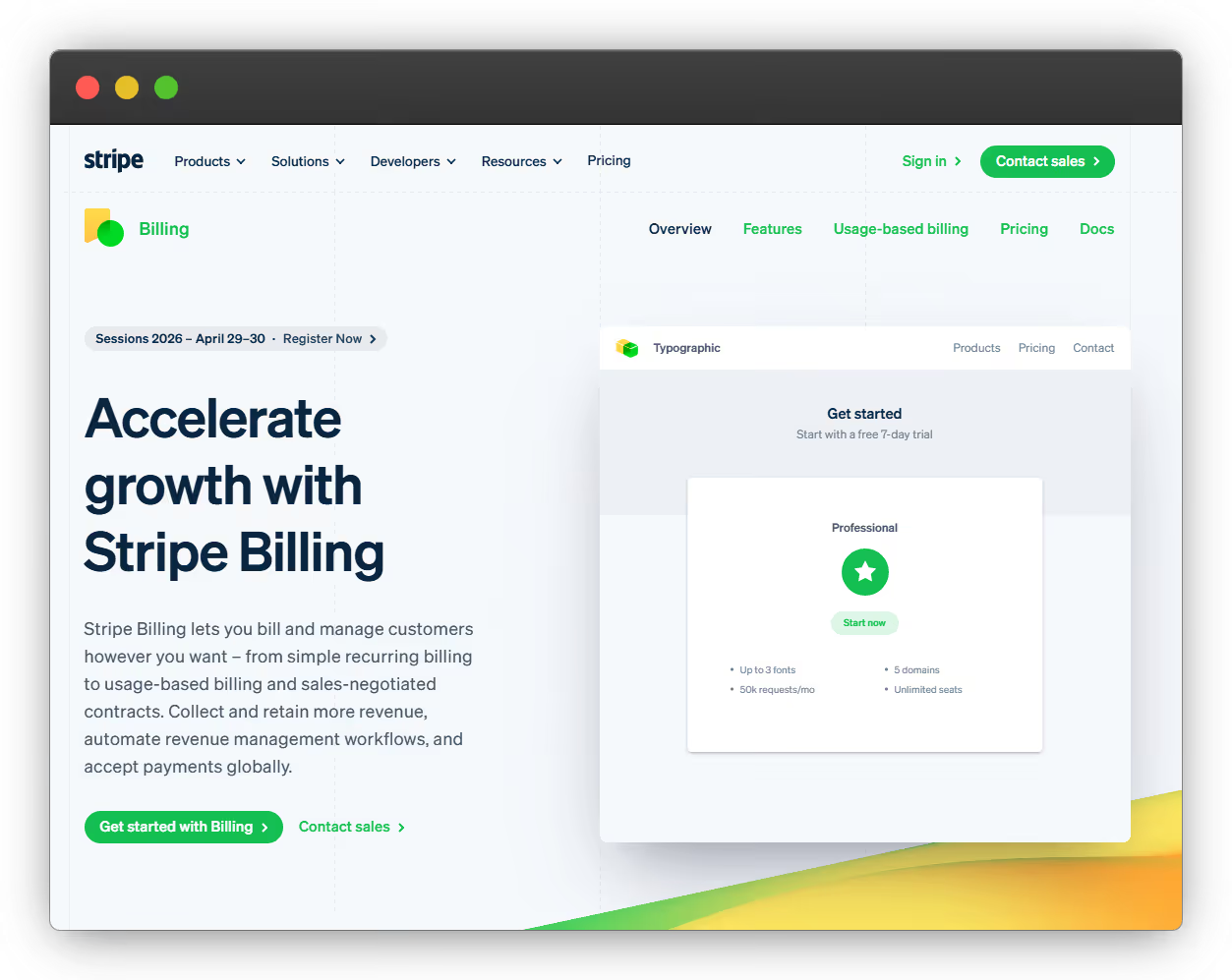
Stripe Billing is usually the pragmatic choice when you already run payments on Stripe and you want subscriptions and invoicing without introducing another billing vendor. It’s reliable infrastructure and gets you far for self-serve and simpler billing operations. The tradeoff shows up the moment deals become negotiated: custom terms, approvals, quoting, signatures, and contract workflows typically sit outside Stripe Billing. That can mean either extra tools or engineering time to bridge gaps, which is exactly why sales-led teams often start looking elsewhere as they grow.
Pricing: Stripe’s usage-based pricing model varies by region and product.
Implementation: Often ~1-4 weeks for simpler setups.
Pros:
Cons:
Limitations: Quote and contract workflows.
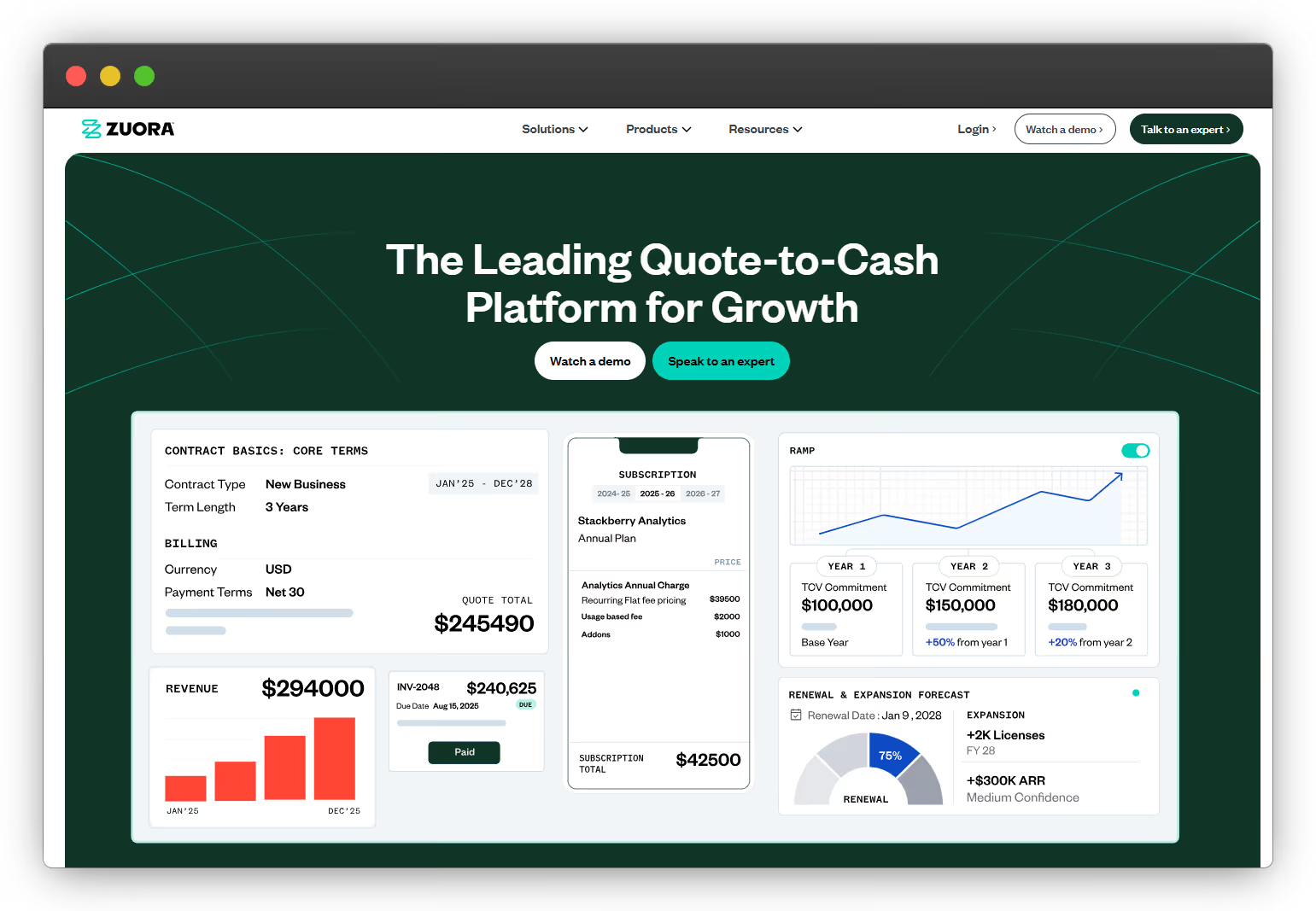
Zuora is the heavyweight option for companies that know monetization will stay complex: usage, amendments, enterprise contracts, and finance requirements that don’t tolerate duct tape. It’s broad, deep, and built for scale. The tradeoff is exactly what you’d expect from an enterprise platform: higher cost, longer implementation, and more change management. For many $500K-$5M ARR teams, it can be more platform than you need right now, unless complexity is already your daily reality and you want to standardize early.
Pricing: Quote-based.
Implementation: Often ~3-6+ months for full deployments.
Pros:
Cons:
Limitations: Time-to-value and internal resources.
Don’t pick a platform based on the best demo. Pick it based on where your deals actually get stuck. At each stage, a different bottleneck takes over, like closing speed, pricing complexity, finance rigor, global tax. Match the tool to the constraint, then sanity-check the cost at your next ARR milestone!
ARR is a useful proxy for one thing: what becomes your loudest revenue hiccup.
Sales cycles are dragging
Involuntary churn is rising
Finance is driving the change
Global tax is the headache
Engineering wants full control
🤫 Insider tip: the fastest way to pick the wrong platform is to optimize for a problem you don’t have yet. Start with the bottleneck slowing revenue today – then sanity-check what breaks next.
Before you sign anything, check how the platform fits into your existing stack. Look closely at native integrations with your CRM, accounting system, payment processor, and data warehouse. Some tools assume significant custom build work, especially around provisioning, usage tracking, and reporting. Others trade flexibility for faster setup. The risk isn’t missing a feature. It’s discovering too late that every change now requires engineering time.
Percentage-based pricing is fine when revenue is small. The surprise is how quickly it stops feeling small.
So don’t sanity-check the cost at today’s ARR. Check it at the number you’re trying to hit next. Add up the obvious line items like platform fees and payment processing. Then include the stuff nobody puts on the pricing page: the hours engineering spends keeping billing logic and integrations alive, the RevOps workarounds, the finance clean-up at month end.
If a tool looks “cheap” only because your team is quietly eating the work, it isn’t cheap. Run the model forward!
In many sales-led teams, the process runs across five separate systems: your CRM, a quoting tool, DocuSign, billing, and accounting. That can work, but each handoff adds some tension.
Minor issues (like pricing updates, creating new quote versions, or signed documents not matching billing entries) frequently force manual reconciliation. These small, frequent errors delay time-to-cash and raise the risk of mistakes.
Have you ever tried to high-five someone on the opposite airport moving walkway? You’re both going at roughly the same speed, but the timing is off, the distance is wrong, and somehow it still takes way longer than it should…
That’s what a lot of B2B SaaS revenue stacks feel like once deals stop being “click to buy”. Pricing gets agreed in one place, contracts get signed in another, payments happen somewhere else, and then everything gets rebuilt so billing behaves. Nothing is technically broken – it’s just awkward, slow, and surprisingly hard to line up.
Salesbricks was created because of this! It gives you one place where the actual offer lives, approvals happen, the buyer signs, and payment is made. No DocuSign hop, no “final version” emails, no re-keying the deal after the fact.
The Brick model is what keeps this from turning messy as you grow. Instead of cloning plans for every custom deal, you assemble offers from reusable pieces (seats, features, usage blocks, platform fees) and price them per customer without filling your catalog with one-off artifacts. And if you’re running both self-serve and sales-led, Magic Links let your pricing page drop buyers straight into checkout, while reps handle larger deals through the same system. Starter pricing begins at $500/month billed annually!
❗If the real reason you’re switching is global tax liability and you want a Merchant of Record to own it end-to-end, you’ll probably end up shortlisting Paddle or FastSpring instead.
Most revenue stacks are built for the company you used to be. They work fine until growth changes how you sell, and then every new deal needs a workaround. The safer move is to choose infrastructure that still makes sense one or two stages ahead, so you’re not rebuilding under pressure.
If you’re heading toward more sales-led deals, custom pricing, and longer contracts, unifying how quotes turn into cash matters more than adding another billing feature. Salesbricks is designed for that transition.
If you want to see how founders move from Stripe, Chargebee, and DocuSign to a single flow where buyers review, sign, and pay in one motion, request a Salesbricks demo and walk through it end-to-end.