30% of your revenue happens while you sleep
Founders don’t buy software during business hours, they buy software when it’s most convenient for them. That often happens after hours at 9 pm, 12 am, or even
We totally get why you chose Stripe as your first billing setup. It’s fast, reliable, and lets you start charging customers without overthinking anything. But as you grow, your first sales hire ends up juggling Google Docs, DocuSign, email threads, and a Stripe link at the very end. It’s messy, it’s slow, and it creates friction exactly when a buyer is ready to move.
You start to notice something else, too… teams with a more unified workflow are closing faster than you. They’re giving buyers a single place to review, sign, and pay, and it shows up directly in their win rates. Luckily, they aren’t harbouring any state secrets – you could have this too!
Most founders don’t decide to outgrow Stripe; it just starts happening in the background as your sales motion changes. A buyer asks for a discount or custom term, and your simple setup turns into quoting in Google Docs, negotiating over email, signing in DocuSign, and sending a Stripe link afterwards. Every extra step slows the deal and increases the chance it slips.
Founders in Reddit threads describe the same: once they move from pure PLG to sales-led, Stripe stops covering the full workflow. Manual quotes create friction, custom pricing lives outside the system, and international buyers trigger tax work Stripe doesn't fully take off your plate. Stitching multiple tools together leads to mismatches between what you sold and what you billed – and reconciliation becomes a recurring fire drill.
These aren’t unique cases. They’re the natural markers that you’ve moved beyond self-serve billing and need a workflow built for shaping and closing deals, not just collecting payment.
Your billing stack changes as your SaaS grows, whether you plan for it or not. In the pre-$1M ARR stage, Stripe Billing plus a few spreadsheets usually gets the job done. If you’re closing under five straightforward deals a month, nothing feels broken yet.
Between $500K and $2M ARR is where you start to see issues. Your first sales hires are shaping custom deals, finance wants real revenue visibility, and the “Google Docs → DocuSign → Stripe link” workflow starts costing you time you can’t afford to lose.
By the time you hit $2M–$5M ARR, things start to get even more serious. International customers expect proper tax handling, and enterprise buyers need formal procurement steps you can’t manage through scattered tools.
And it turns out ARR isn’t the thing that pushes you to upgrade. It’s your sales motion. Sales-led teams run into this wall long before product-led teams do.
Stripe Billing is great for simple, repeatable subscriptions. But once your deals start looking like real B2B contracts, it's a different story. Ramp deals, where pricing increases over contract years, require manual workarounds. Nothing handles multi-year step-ups cleanly, so you end up stitching together multiple prices that never quite match the contract.
Usage-based pricing gets even harder. Blended tiers, minimum commits, overages, or multiple usage dimensions force most teams into spreadsheets, hoping the invoice matches what the customer actually used.
Mid-cycle changes bring their own bumps in the road. Adding seats or adjusting terms triggers proration rules that rarely match what you agreed with the buyer, sending you back to reconcile everything manually.
This is when founders start looking beyond Stripe. Tools like Chargebee and Recurly extend Stripe with advanced subscription logic, while Salesbricks takes over the full quote-to-cash flow – negotiation, pricing, collaboration, and e-signature included!
There’s a point where the problem isn’t Stripe at all; it’s that you’re trying to run a sales motion on top of tools built for self-serve. The first warning sign usually comes from your sales team. They’re spending hours shaping a single quote that should take minutes, bouncing between Google Docs, PDFs, and old versions they’re not sure are accurate anymore.
Then finance feels it. Someone ends up owning the weekly headache of reconciling what you sold versus what you actually billed, because the numbers never match on the first try.
Your buyers start asking for things your current setup can’t model cleanly: custom pricing, bundles, multi-year terms, or add-ons that don’t fit your standard plans.
And the order of operations becomes impossible to ignore. You need to shape and close the deal before you can bill for it, but your tools only kick in once the deal is already done and dusted.
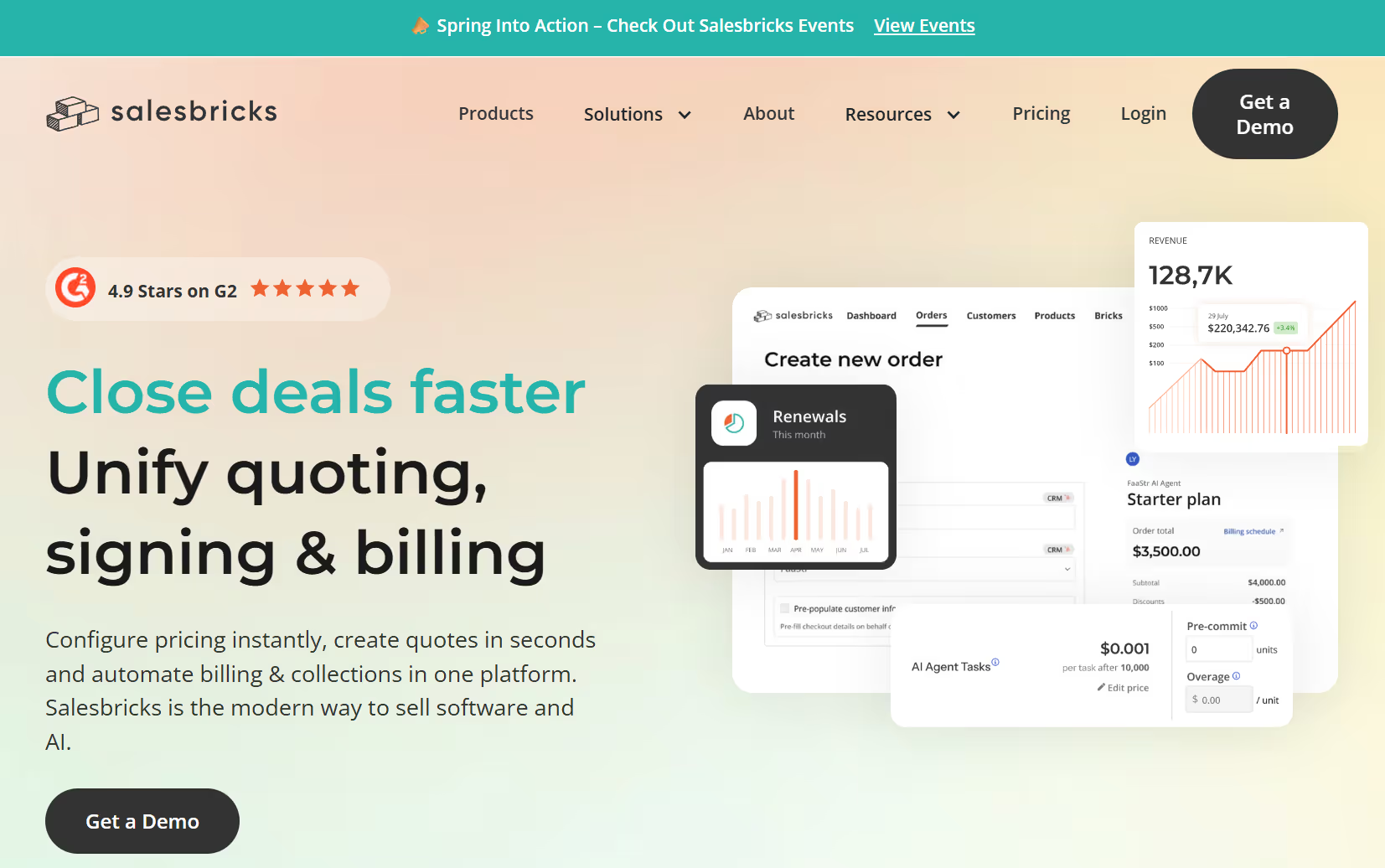
Salesbricks is the Stripe alternative built specifically for sales-led SaaS. In the broader landscape of Stripe alternatives, billing layers like Chargebee, Merchant-of-Record platforms like Paddle, and payment gateways like Braintree, Salesbricks sits in the quote-to-cash category. It’s for teams that need a clean way to shape deals, manage approvals, and collect payment in one motion.
Each deal gets a dynamic URL where buyers review the quote, request changes, see updates instantly, sign, and pay, without bouncing between Google Docs, PDFs, and Stripe links. It’s designed for $500K–$2M ARR sales-led SaaS that needs professional quoting without enterprise CPQ complexity or long implementation cycles.
And because Salesbricks actually uses Stripe, you keep the payment rails you trust while upgrading the entire final mile of your sales process!

If a growing share of your revenue comes from outside your home country, Paddle is one of the strongest Stripe alternatives to think about. Stripe processes global payments, but you still handle VAT and sales tax registration, collection, filing, and compliance. Paddle takes a different approach by acting as your Merchant of Record, becoming the official seller and taking on all global tax and compliance work for you.
Paddle charges higher fees, but it removes international tax work entirely. Most SaaS teams begin considering it once global revenue reaches 30-40% and tax administration starts consuming meaningful time.
Compared head-to-head with Stripe, Paddle isn’t cheaper, but it eliminates a category of work Stripe doesn’t cover. If compliance risk and global filings are draining your team, the MoR model often pays for itself.

If you sell globally and need help with VAT, sales tax, and local payment methods, FastSpring is one of the main Merchant-of-Record choices alongside Paddle. Both remove the tax and compliance burden, but FastSpring is especially strong for software downloads, digital goods, and one-time purchases.
FastSpring operates as a full reseller and MoR, handling tax collection, filing, and cross-border compliance while supporting a wide range of local payment options. It’s built for companies selling licenses, downloadable software, or hybrid digital offerings where customers expect flexible payment methods across many markets.
Where it’s less of a fit is pure SaaS subscription management. Paddle generally handles recurring revenue, upgrades, and subscription workflows more cleanly. FastSpring is better when your product mix goes beyond subscriptions and includes digital products that don’t map neatly into standard SaaS billing tools.
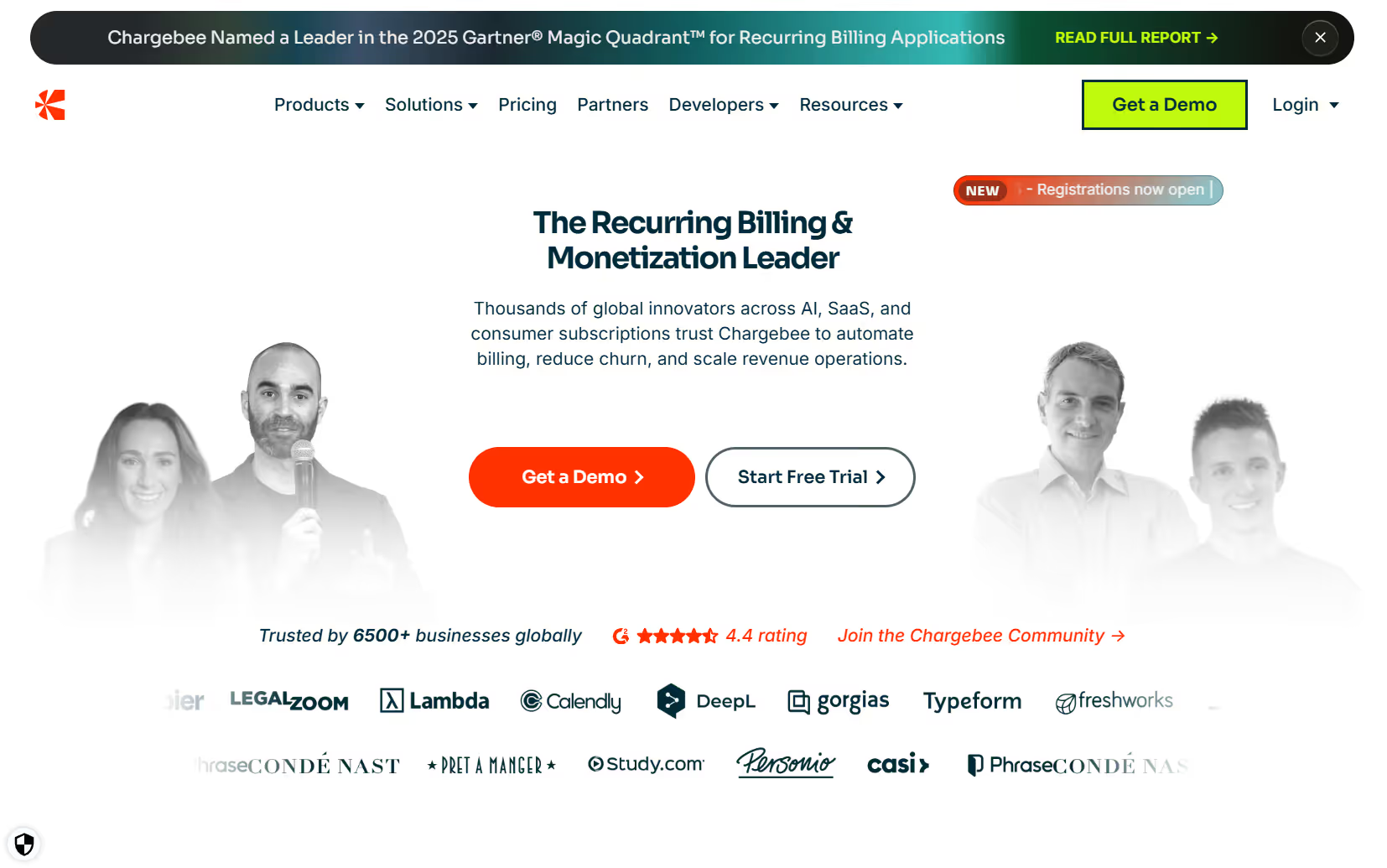
Chargebee isn’t a replacement for Stripe; it’s the billing layer you add when you want to stay on Stripe but need more subscription sophistication than Stripe Billing typically offers out of the box. It plugs directly into your Stripe setup and gives you richer lifecycle logic than Stripe Billing: cleaner control over proration, more granular trial management, automated dunning campaigns, and upgrade/downgrade flows without custom code.
You also get the finance tooling most SaaS teams eventually need, like revenue recognition and audit-ready reporting, plus the kind of advanced subscription analytics and revenue reporting that Stripe Billing doesn't provide out of the box.
Chargebee is a strong fit for product-led companies that want to keep Stripe as their processor but need more control as pricing grows more complex. If your motion is self-serve and your challenge is subscription logic, not quoting or contracts, Chargebee is usually the most natural next step.
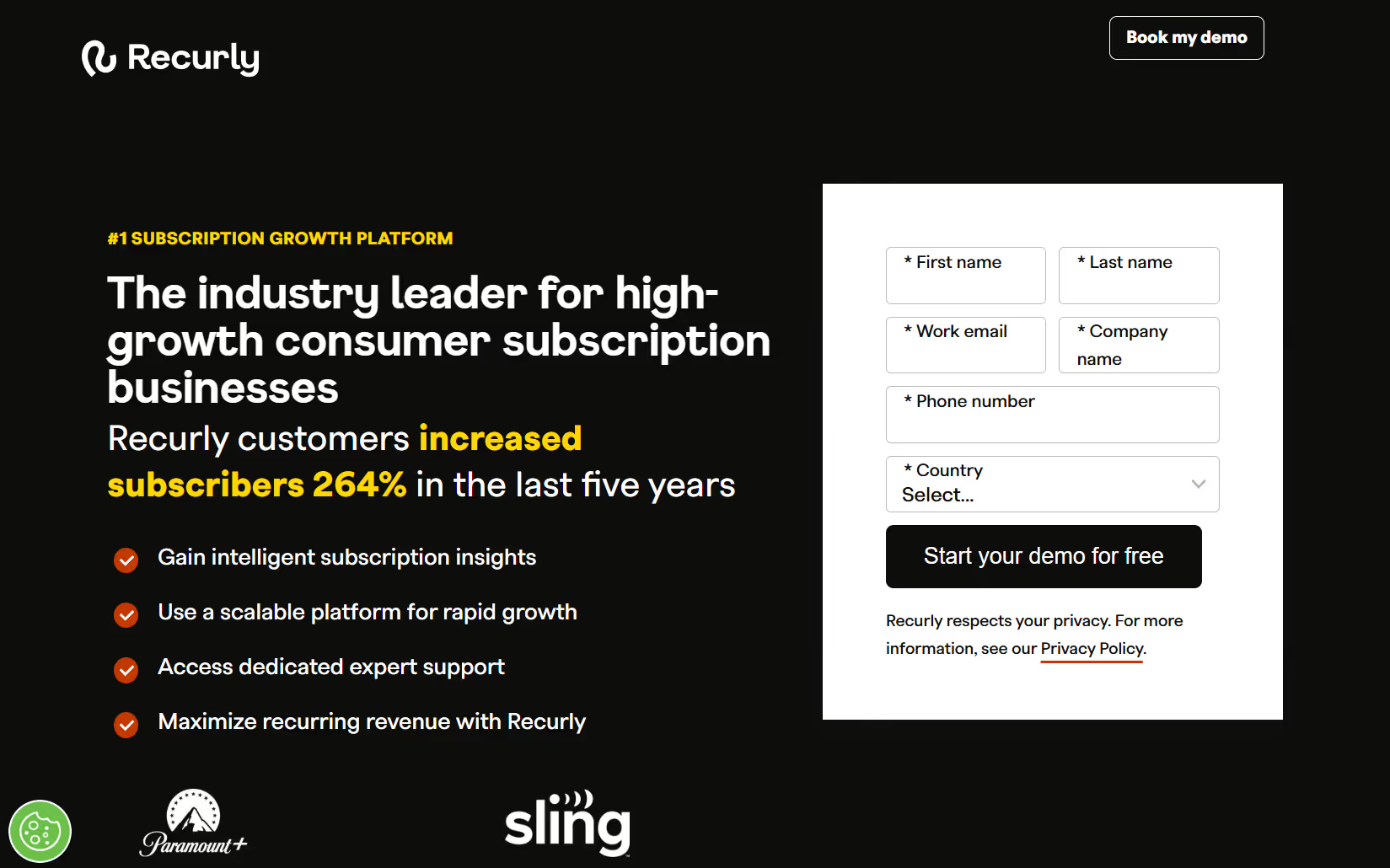
Recurly, like Chargebee, sits on top of Stripe as a subscription billing layer rather than replacing your payment processor. Its real strength is protecting recurring revenue. Recurly’s advanced dunning workflows, smart retry logic, and detailed churn analytics reduce involuntary churn from failed payments, which matters a lot for high-volume PLG SaaS.
If most of your revenue comes from self-serve subscriptions and small upgrades, Recurly’s recovery and retention tools often outperform DIY dunning flows built directly on Stripe Billing. You also get deeper lifecycle reporting and automation without custom engineering.
From a developer’s perspective, Stripe still offers the best API experience, but if you’re looking for flexibility outside Stripe’s ecosystem, Braintree is the closest match – especially when PayPal support matters.
Recurly is a strong fit when retention and churn reduction move the needle more than rethinking your upstream sales process.
If a meaningful share of your customers prefer PayPal, Braintree is the Stripe alternative most founders think about first. Because it’s owned by PayPal, you get native PayPal support built directly into the checkout flow – no add-ons, no plugins, and fewer failed payments from buyers who rely on their PayPal balance.
Braintree also appeals to technical teams. Its API is one of the few that genuinely rivals Stripe in flexibility and control, making it a strong option for custom payment flows.
But it’s important to be clear about what it solves. Braintree addresses payment method preference, not the broader revenue workflow. It won’t help with quoting, negotiation, e-signature, or contract steps. If PayPal coverage is the blocker, Braintree is a good fit. If your friction lives upstream in the sales process, you’ll still need a quote-to-cash layer.
Choosing the right tool to extend or replace Stripe is about how you sell your product.
If your business is pretty straightforward and "product-led," you can likely stick with Stripe, adding tools like Chargebee or Recurly for complexity.
Teams with salespeople hit a wall faster. The minute you need negotiations, custom prices, or contracts, you need a "quote-to-cash" system to manage the work before the bill.
Companies that do both (self-serve and enterprise) typically add this quote-to-cash system when bigger deals are worth about $10K–$20K or more, as manual quoting becomes inefficient.
Your sales model already dictates the solution you need, saving you months of comparing tiny feature lists.
A payment gateway like Stripe or Braintree processes transactions, but you remain the seller. That means registering for VAT or sales tax in every region you sell into, collecting the right amounts, filing returns, and carrying the liability. It’s manageable early on, but becomes a real operational load as global revenue grows.
A Merchant of Record (MoR) like Paddle or FastSpring flips that model. They become the official seller on your behalf, handle worldwide tax compliance, and take on the risk – in exchange for higher fees.
Under roughly $1M ARR, that premium usually outweighs the benefit. But once you’re in the $3M–$5M range with meaningful international revenue, the MoR model can often become cheaper than handling global tax registrations and filings yourself. It’s the point where buying back your team’s time, and reducing compliance risk, outweighs the fee difference.
It’s easy to compare Stripe to other platforms by looking at the headline fees. Stripe sits at 2.9% + $0.30, while MoR platforms typically start around 5–7% effective fees, and quote-to-cash tools add a subscription plus usage. But once your SaaS starts growing, the fee itself becomes the least of your costs.
Stripe covers payments – not everything around them. As deals get more complicated, you bolt on CPQ software, a document tool, an e-signature platform, tax software, and whatever you need for approvals. Each has its own price tag and pulls more time from your team.
Quote-to-cash platforms roll those pieces into one place. You still pay a platform fee, but you remove four or five tools and all the associated admin.
And then there’s the part no one budgets for: engineering hours. Custom pricing logic, Stripe workarounds, integrations, and webhook babysitting can burn months of developer time. By the time you add that up, the ‘cheap’ option usually isn’t cheap at all.
Switching billing tools feels risky, but most of that fear disappears once you understand token migration. It lets you move customer payment methods from one provider to another without asking anyone to re-enter their card details. When that’s in place, a migration can be almost invisible to customers.
And if you’re moving to a platform that still uses Stripe underneath (like Salesbricks, Chargebee, or Recurly), the risk drops even further. You’re not replacing your payment processor. You’re just upgrading the workflow that leads into it.
Adyen often comes up in these conversations, but it’s not a universal upgrade. It’s built for companies processing $50M+ a year, where direct acquiring relationships and local processing can reduce costs and improve authorization rates. For most SaaS companies, keeping Stripe as the rail and improving the quote-to-cash layer is the safer, faster path.
Once you map how your business actually makes money – your revenue model, your sales motion, and how much operational risk you’re willing to take on – the right path usually becomes obvious.
If you’re mostly product-led and simply need stronger subscription logic, staying on Stripe and adding a billing layer like Chargebee or Recurly is the easiest move. You keep Stripe, gain better lifecycle management, and your workflow stays familiar.
If international sales are creating tax overhead and compliance headaches, that’s when Merchant-of-Record platforms like Paddle or FastSpring start to make sense. They take on the tax burden, the filings, and the liability – you trade a higher fee for time and peace of mind.
And if the work slowing you down lives earlier in the sales process – shaping quotes, handling negotiation, tracking custom terms, or managing contract steps – you’ve moved into quote-to-cash territory. At that point, the limitation isn’t Stripe; it’s the workflow around it.
For early-stage, sales-led SaaS in the $500K–$2M ARR range that still wants Stripe as the payment rail, the natural next step is adding a unified final-mile layer on top. That’s exactly what Salesbricks is built to be.
Once your deals involve real quoting and negotiation, the slowdown isn’t in payment processing – it’s in everything that happens before it. Salesbricks fixes that by giving each deal a dynamic checkout link where your buyer can review the quote, request changes, see updates instantly, sign, and pay in one place.
It removes the familiar mess: a Word doc becomes an email thread, then a PDF, then a DocuSign link, then a Stripe link, and finally a reconciliation headache for finance. With Salesbricks, you change pricing or terms once, and your buyer sees it immediately – no version control, no resending files.
Tribble used to spend days or weeks shepherding a deal through procurement. With Salesbricks, they can close the same day the customer is ready – because quoting, signing, and payment finally live in one workflow instead of five tools.
Most SaaS pricing breaks down because it’s built like a messy spreadsheet – one small change ripples everywhere and nothing stays in sync. Salesbricks fixes this by structuring pricing like LEGO: Products → Plans → Bricks. Products are the sets, Plans are the variations, and Bricks are the reusable pieces you snap together to build any configuration.
Bricks do the heavy lifting. Update one Brick (a seat price, a usage tier, a service fee) and every plan using it updates automatically. No SKU sprawl, no hunting through old spreadsheets, no “which version is correct?” panic minutes before a call.
Because Bricks can represent almost anything you sell – fixed fees, usage tiers, minimum commitments, hybrid seat-plus-consumption, or bundled services – you can shape the kinds of deals that break most billing tools: ramp contracts, tiered usage, mixed one-off + recurring, or full enterprise packages.
And since you’re assembling from Bricks instead of inventing SKUs on the fly, your catalog stays clean and predictable. Sales gets clarity, finance gets real data, and you get pricing that scales instead of collapsing under its own complexity.
A major advantage of using Salesbricks is that you don’t have to replace the payment system you already trust. Salesbricks uses Stripe for payment processing, so your customers still pay through Stripe, and your finance team keeps the reporting and payout flow they already know.
What you’re replacing isn’t Stripe – it’s the manual quoting process you’ve patched around Stripe Billing. The Word docs, the back-and-forth edits, the DocuSign link, the Stripe link, the reconciliation cleanup at the end. Salesbricks takes over that whole final-mile workflow while leaving your payment rails untouched.
Because customer payment methods stay in Stripe via secure token access, migration risk stays low. You’re not asking customers to re-enter card details; you’re simply upgrading the steps that lead to Stripe.
And if you ever add new payment methods or switch processors down the line, you won’t have to rebuild your entire revenue workflow. Salesbricks sits above the processor layer, so your quote-to-cash system stays stable even as your payment strategy evolves.
You’re not exploring Stripe alternatives because Stripe stopped working – Stripe is great! You’re here because your sales team is spending too much time stitching together quotes, PDFs, emails, and Stripe links, and every extra step risks slowing a deal your competitor will close faster.
Upgrading your revenue process isn’t a big deal. It’s a natural step once your sales motion outgrows self-serve tools. Teams that make the switch early see shorter deal cycles, fewer errors, and a buying experience that feels as polished as the product they’re selling.
If you’re ready to turn the final mile from a drag on your deals into something that helps you win them, see how Salesbricks works on top of the Stripe infrastructure you already trust!