30% of your revenue happens while you sleep
Founders don’t buy software during business hours, they buy software when it’s most convenient for them. That often happens after hours at 9 pm, 12 am, or even
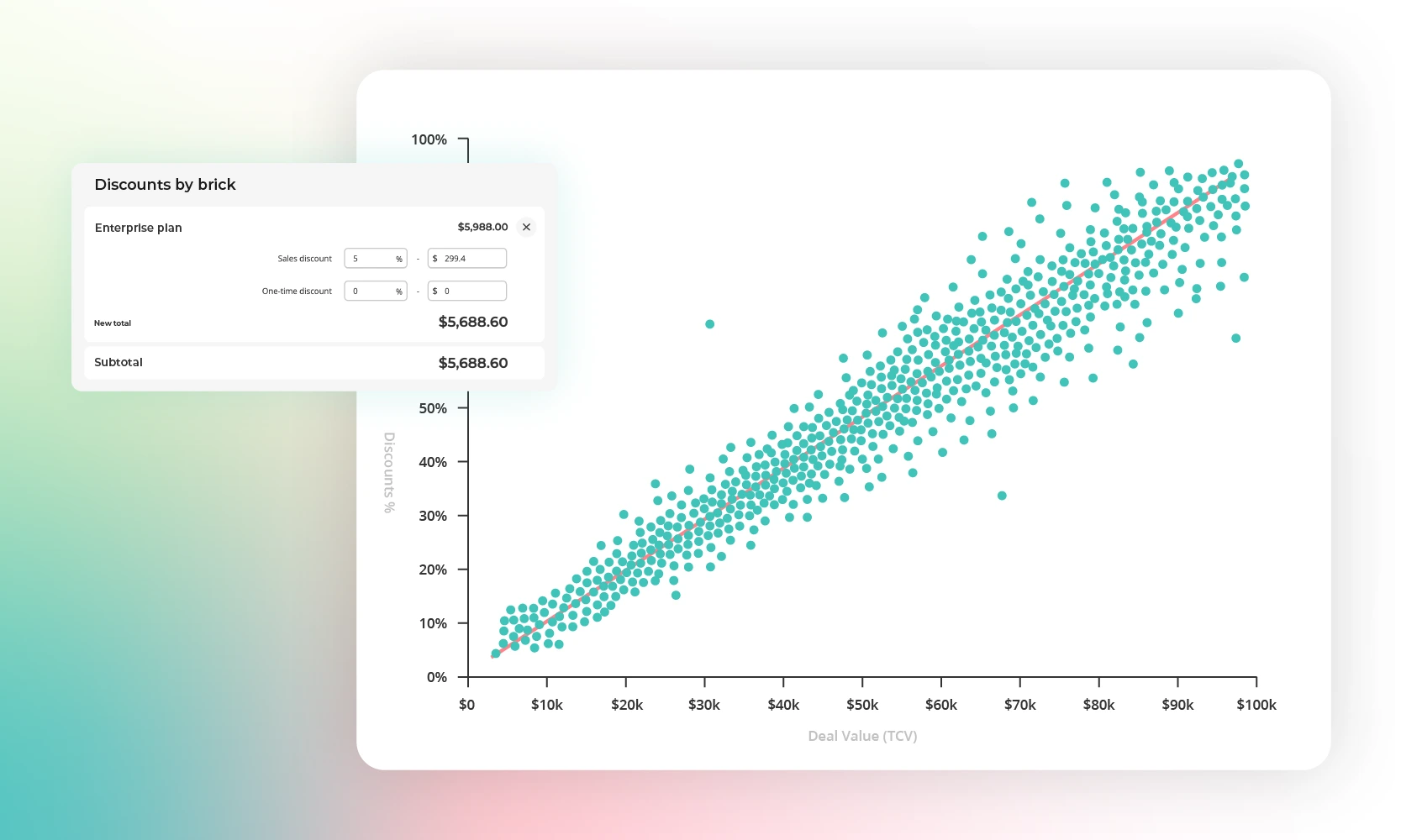
In a competitive SaaS market, every deal matters, and discounting remains one of the most effective tools for helping sellers win. For growth-stage companies, it’s not about lowering prices but about aligning with the customer’s budget, perception of value, and how the product compares to other tools in the market. Sellers are responsible for finding the right balance between the price a customer is willing to pay and the revenue they need to bring into the business, all while keeping profitability and the cost of sales in mind.
We looked at more than 4,000 deals from Salesbricks’ top customers to understand how they discount.
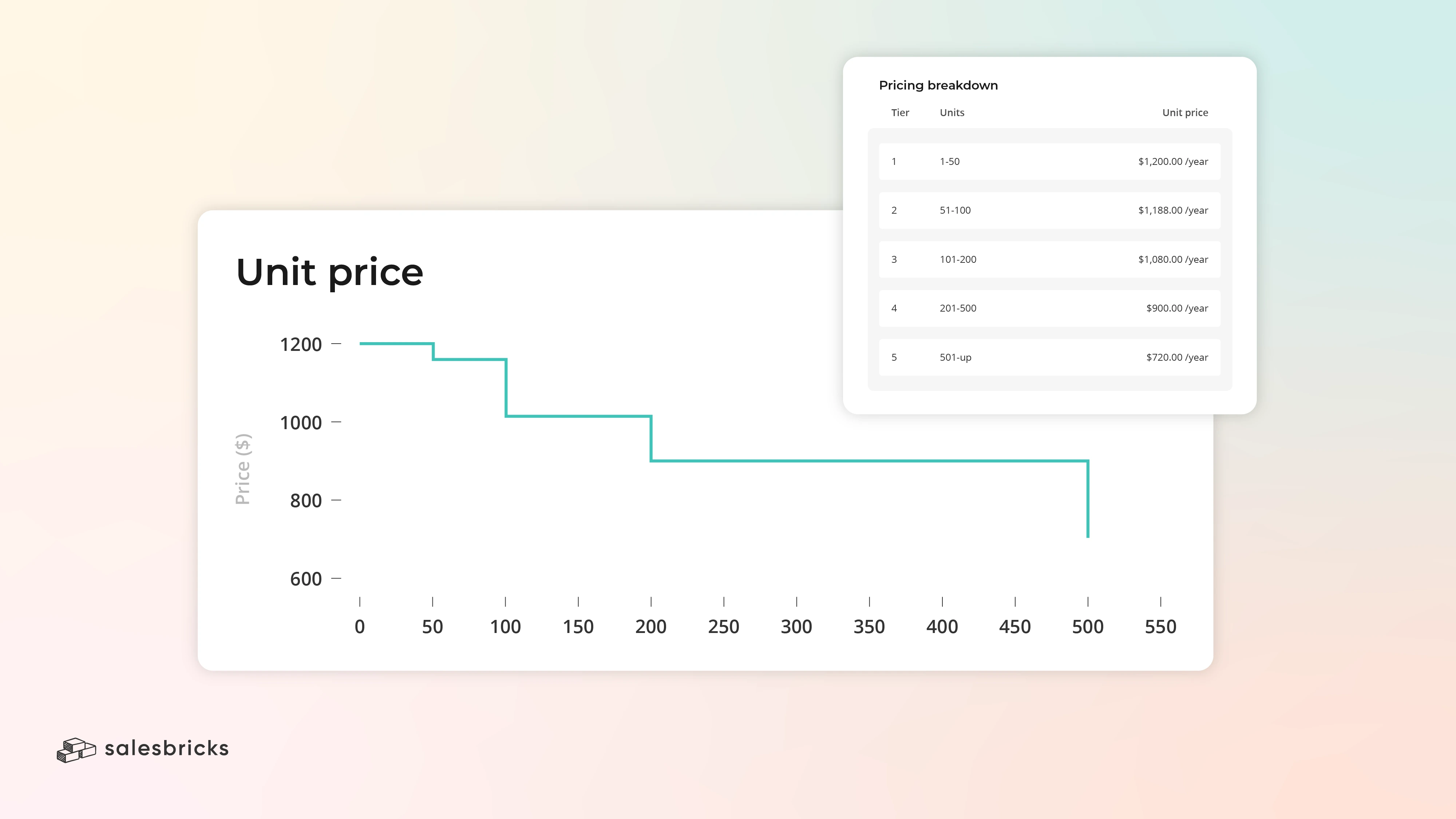
Our data shows a consistent pattern. Discounts stay surprisingly steady across deal sizes, usually between 25% and 35%. This happens because Salesbricks customers build tiered pricing schedules that shape unit economics through tiered, volume, and banded rates, giving customers predictable pricing as they purchase more units. Think of this as controlled discounting. The goal is to keep the discount on the initial order as low as possible. This is important because the customer increases usage over time, the vendor is working from a lower discount baseline, which helps protect revenue potential and business margins.
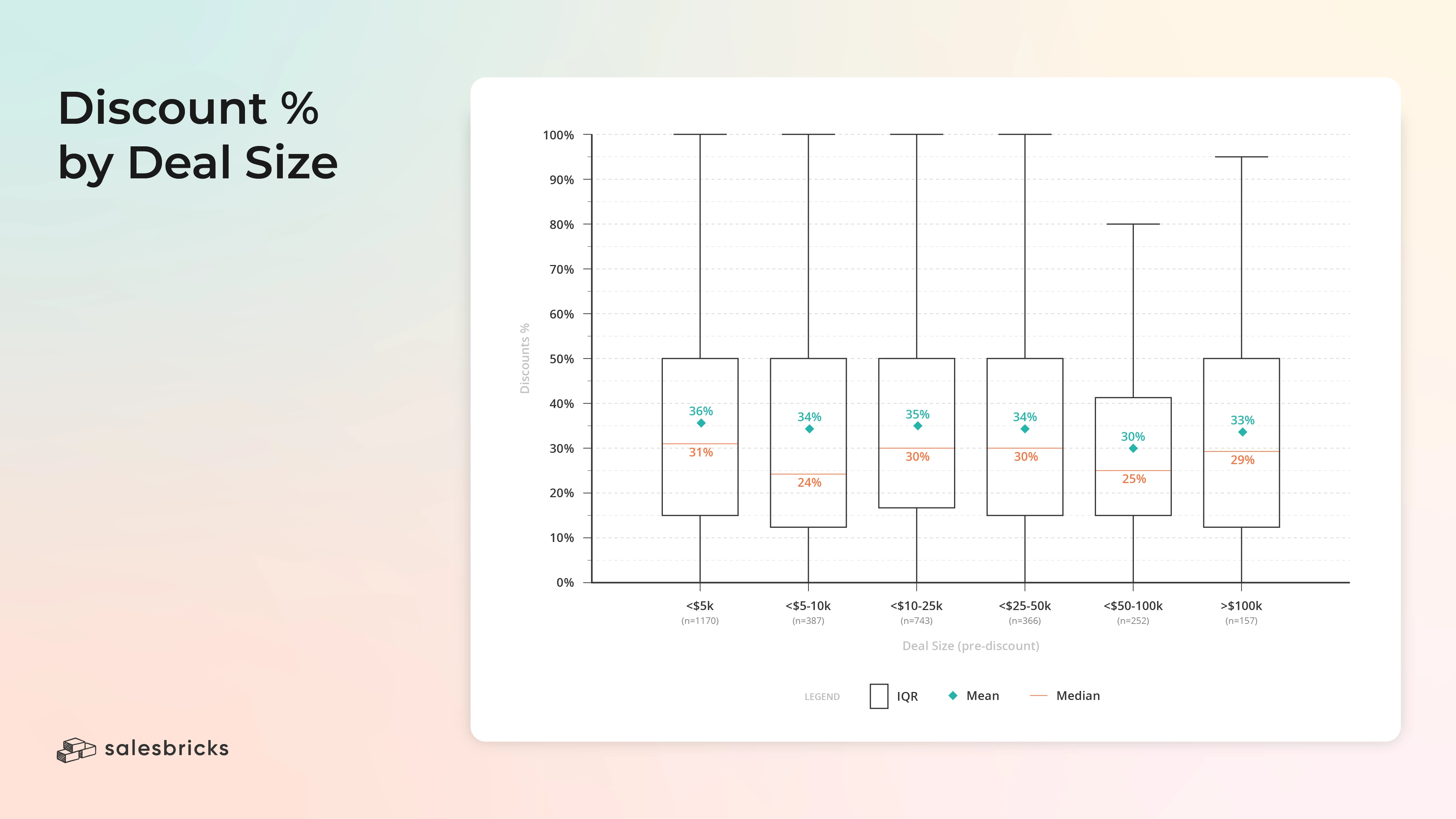
In the data above, Salesbricks customers keep most discounts near 30% by using tiered, volume, and banded pricing. These mechanisms give customers a clear economic incentive to align spend with usage. As buyers purchase more units, they earn access to better unit rates. This approach is common in B2C and is helping B2B vendors differentiate themselves in competitive markets. Without tiered, volume, or banded structures, vendors often grant large upfront discounts, leaving little room to adjust as usage and spend grow.
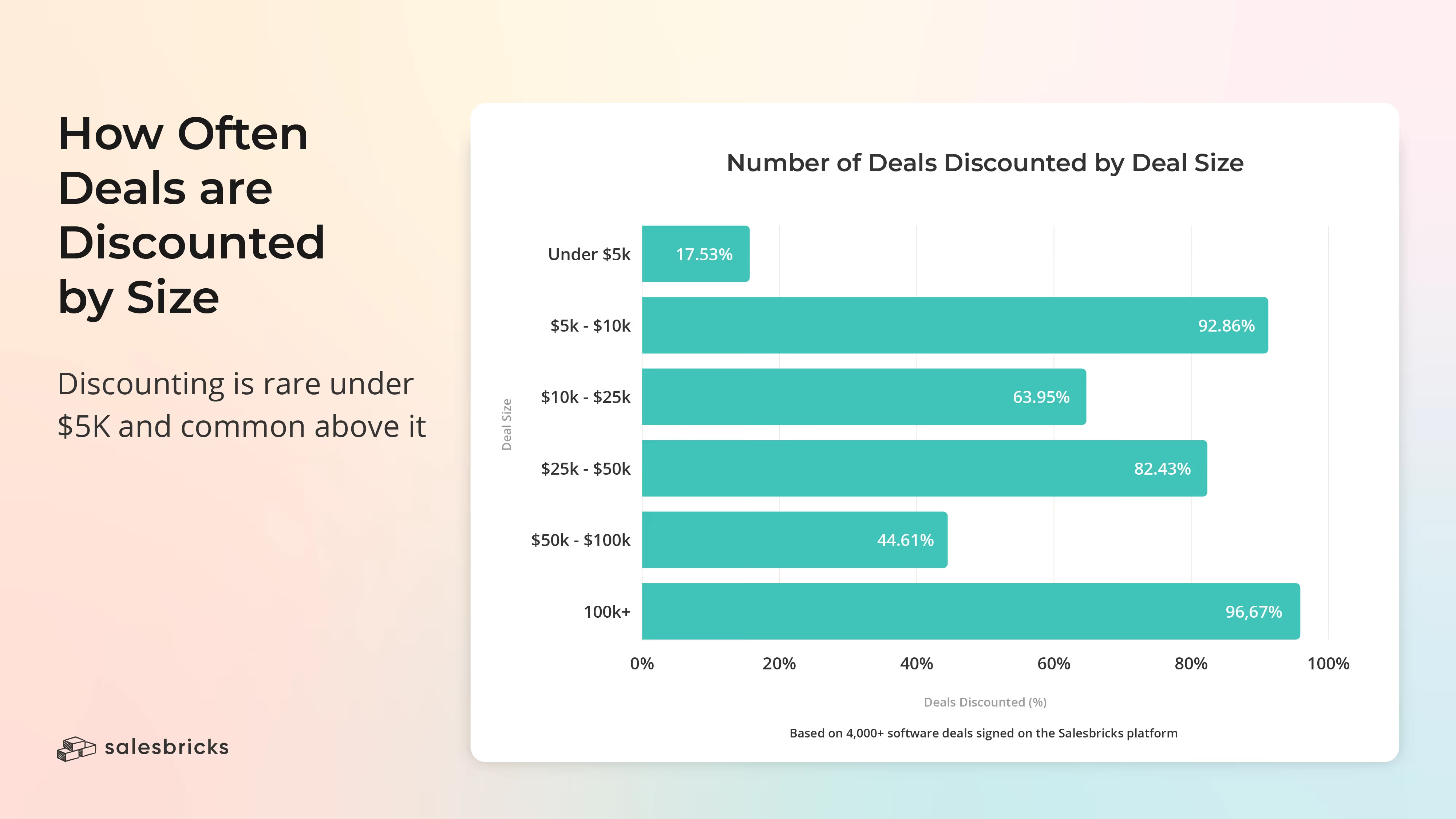
The data shows a clear turning point in how companies handle pricing. Below $5K, most deals close at list price. Once contracts cross $5K, deals usually include a discount. This suggests that discounting is not evenly distributed across all deal sizes. It begins when a deal reaches a certain level of financial scrutiny. Beyond that point, pricing discussions are standard in every SaaS purchase.
The data shows that sales discipline drives results. Discounts work best when they’re planned, controlled, and part of a clear framework, not something spontaneous or driven by emotion at the end of the quarter. Setting defined thresholds and clear ranges helps teams move faster, bring predictability to customers, and protect revenue and margins.
The comparison below shows how discounting patterns shift when a company moves from an unstructured model to a disciplined one. Structured discounting sets clear boundaries that make pricing predictable and protect revenue across deal sizes.
In the example below, one company follows a disciplined model based on spend, where higher spend unlocks higher discounts. The other uses an unstructured approach, giving larger discounts to smaller customers. This leaves renewals and upsells in a weak position and makes it harder for vendors to stay profitable as customers buy more.
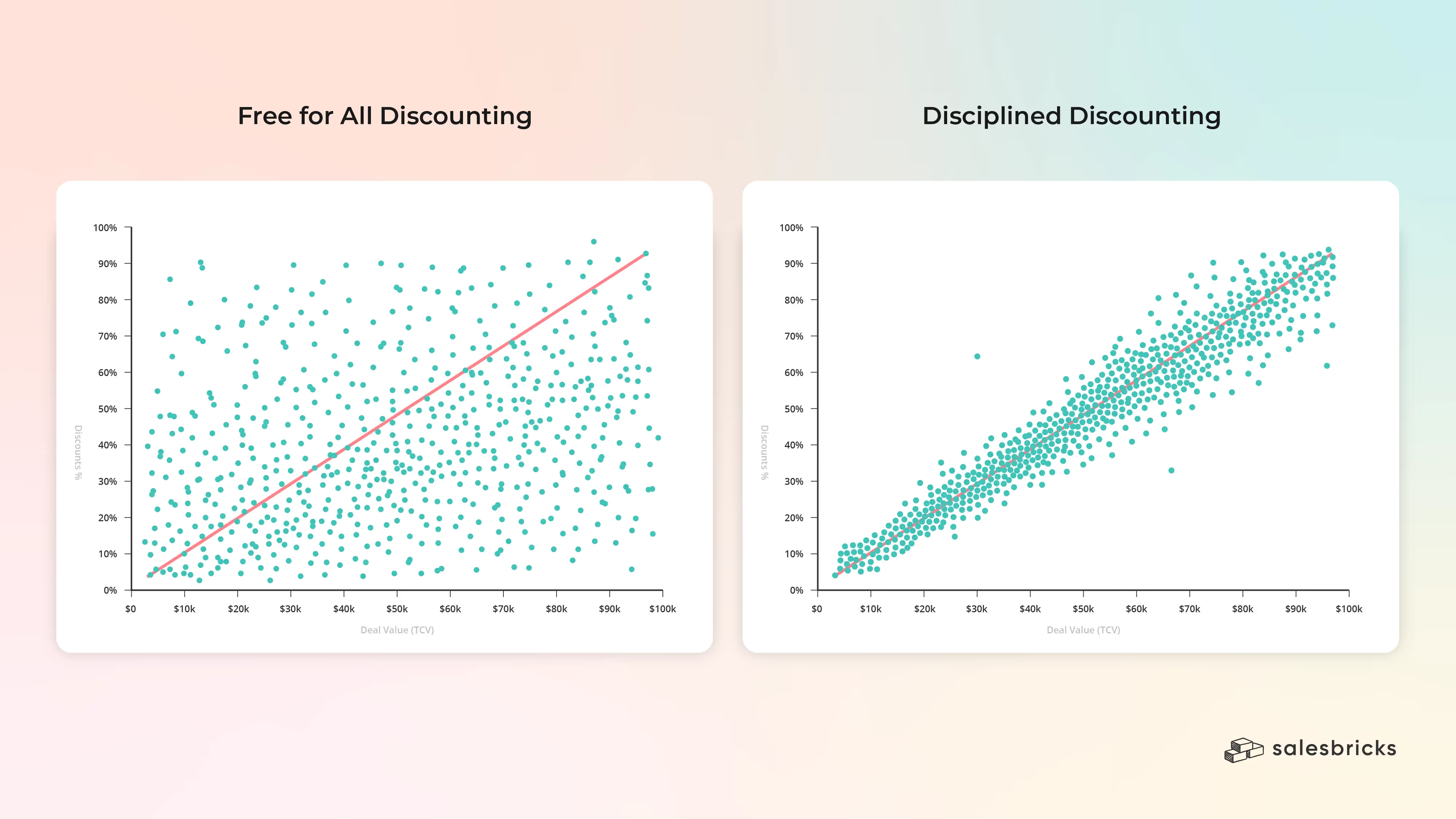
Salesbricks turns discounting into a controlled system. Teams can apply discounts to a single item, make them time-bound, or run promotions that do not roll into upgrades, recasts, or renewals. Tiered, volume, and banded pricing schedules are built in, so reps can compete where needed while keeping list prices on the rest. The result is disciplined discounting that speeds deals and protects revenue.